
August has been a relatively quiet month for us, after a frenetic early Summer monitoring and ringing first-brood chicks. We’re obviously concerned about how those youngsters will have been coping in the heatwaves; time will tell.
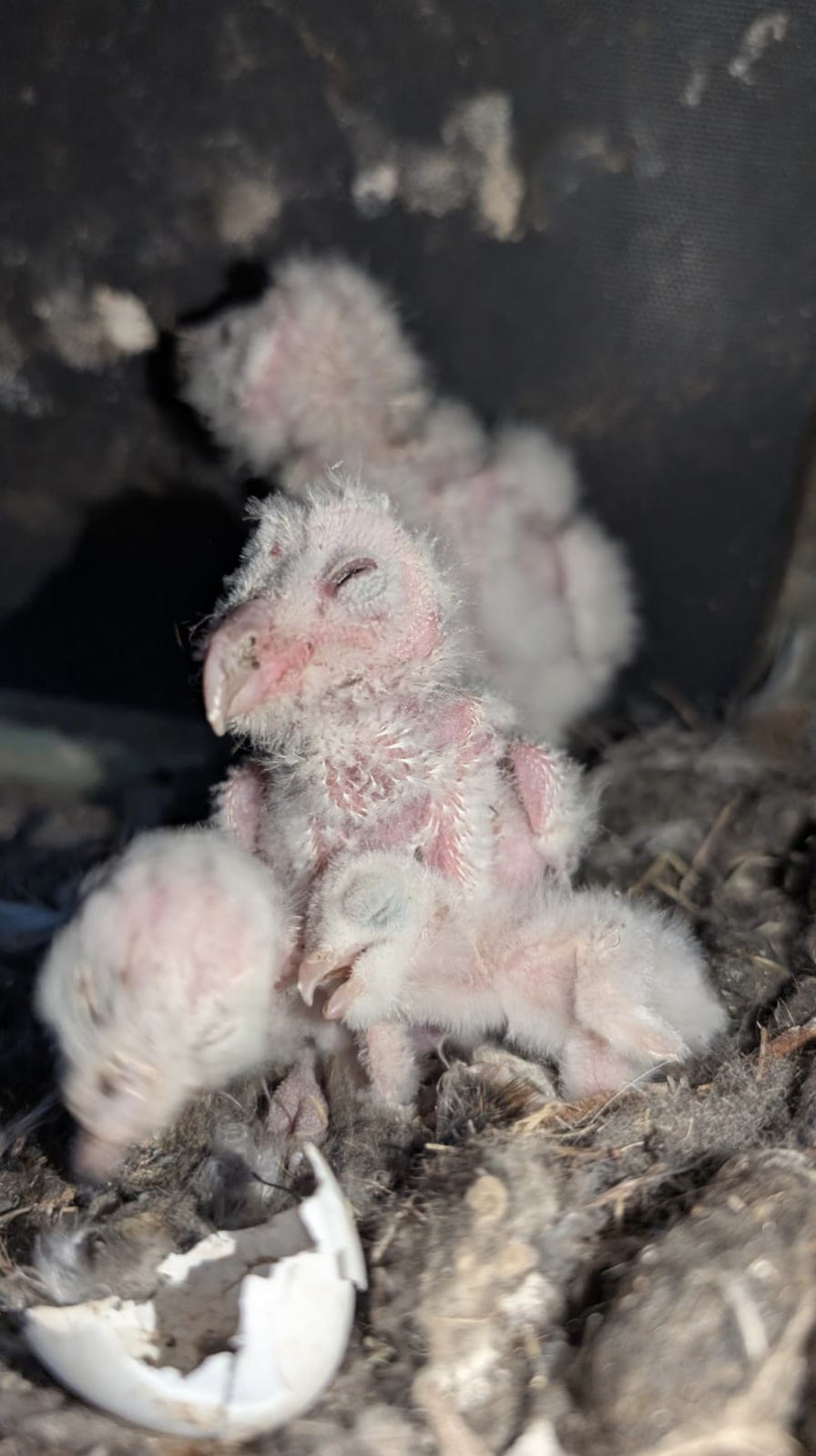
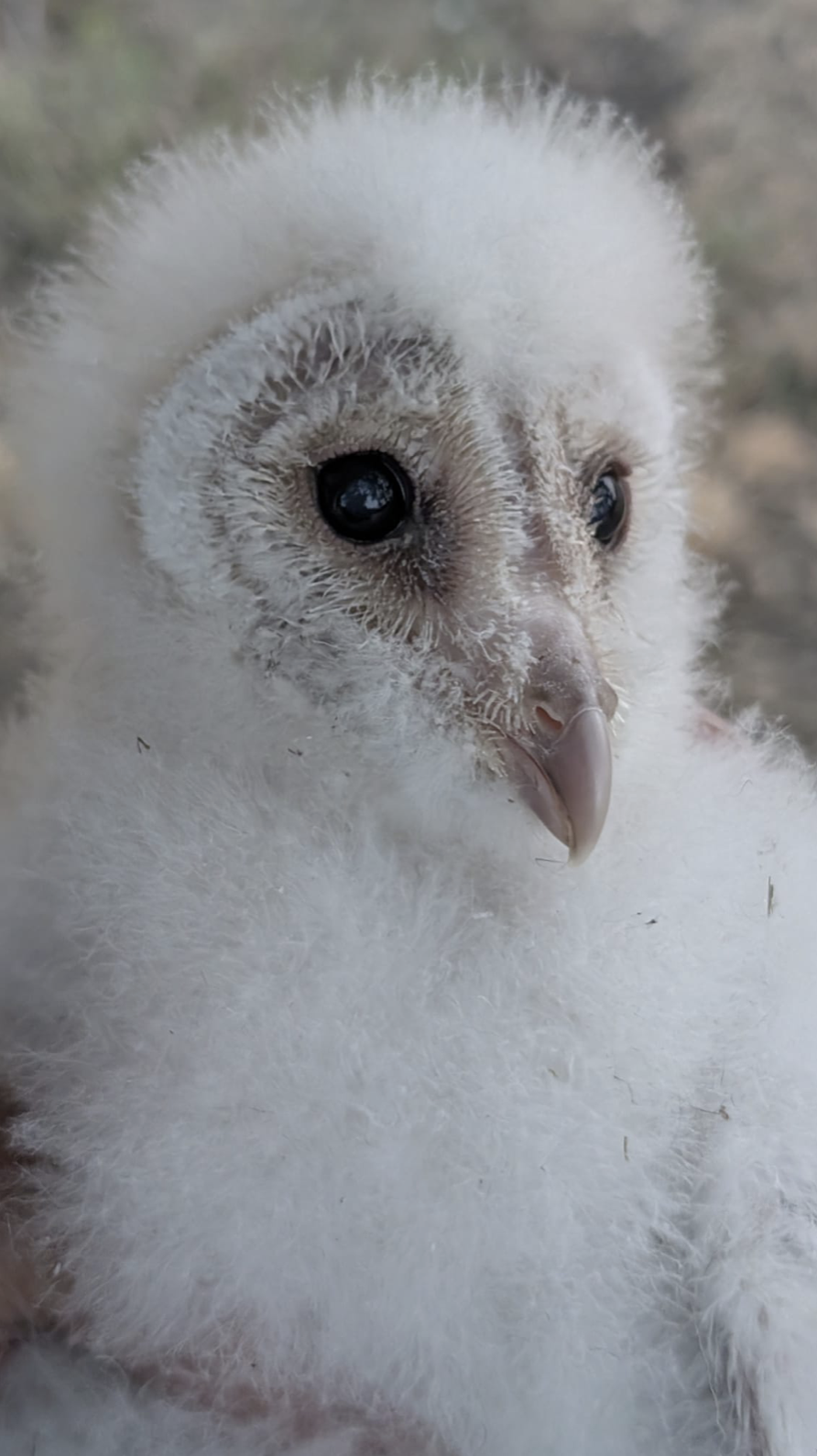
Barn Owls generally have a single brood each year, but second broods are not uncommon when the circumstances are favourable. That means a plentiful food supply – a thriving vole population – and good hunting weather. With first broods this year being relatively early (and large), second broods should be a distinct possibility, but… as I type this we have had the first significant rain locally for about two months. The grass across the county is a pale straw colour, desiccated after weeks of baking in high temperatures. It’s not been good weather for voles or owls. Having said that, Claire did find one second brood, of four chicks (pictured), in mid-month. She noted there was no cache of food for them and all four had empty gizzards, which didn’t augur well. At the time of writing, just one healthy chick from that brood (pictured) survives.
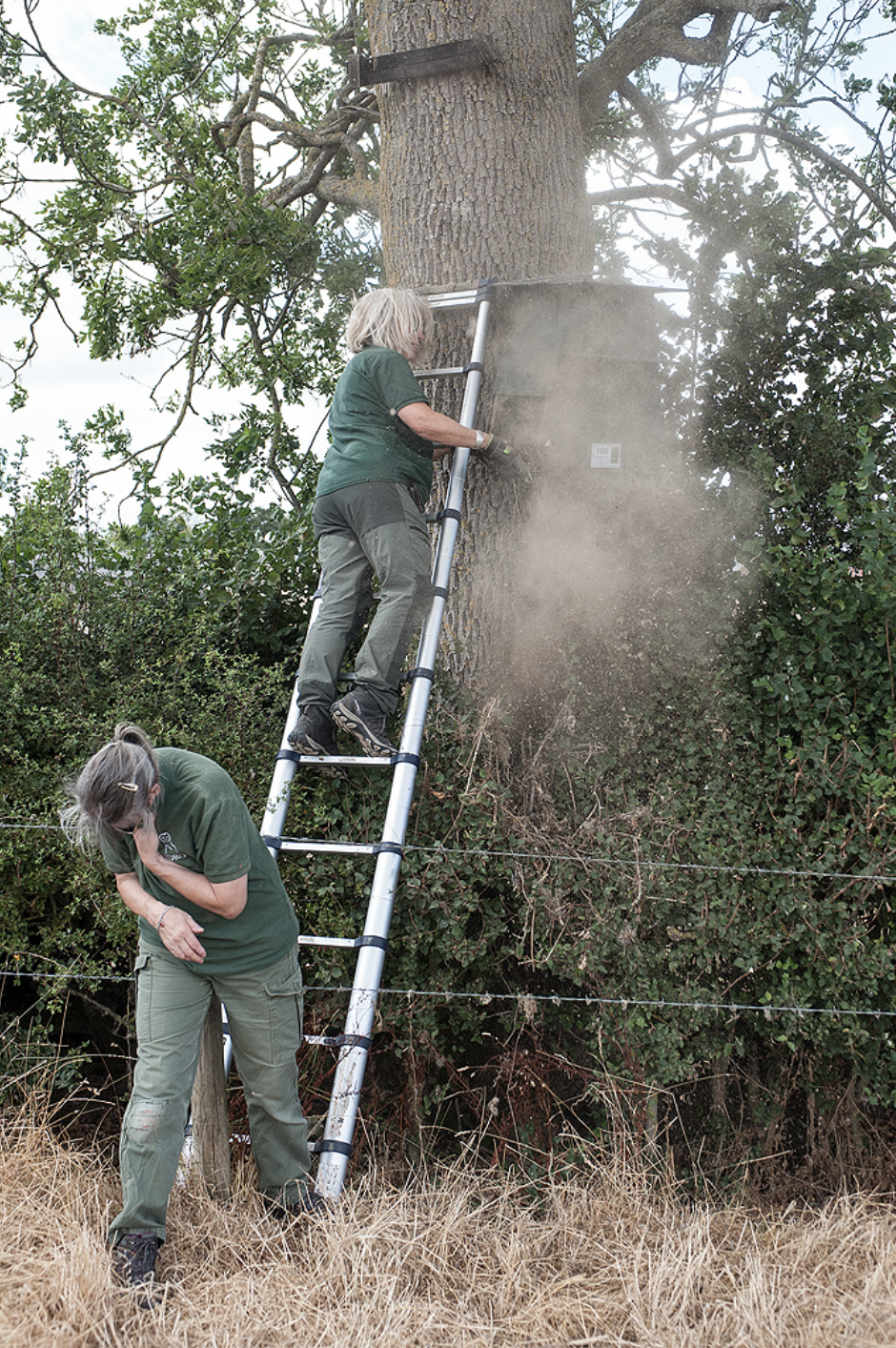
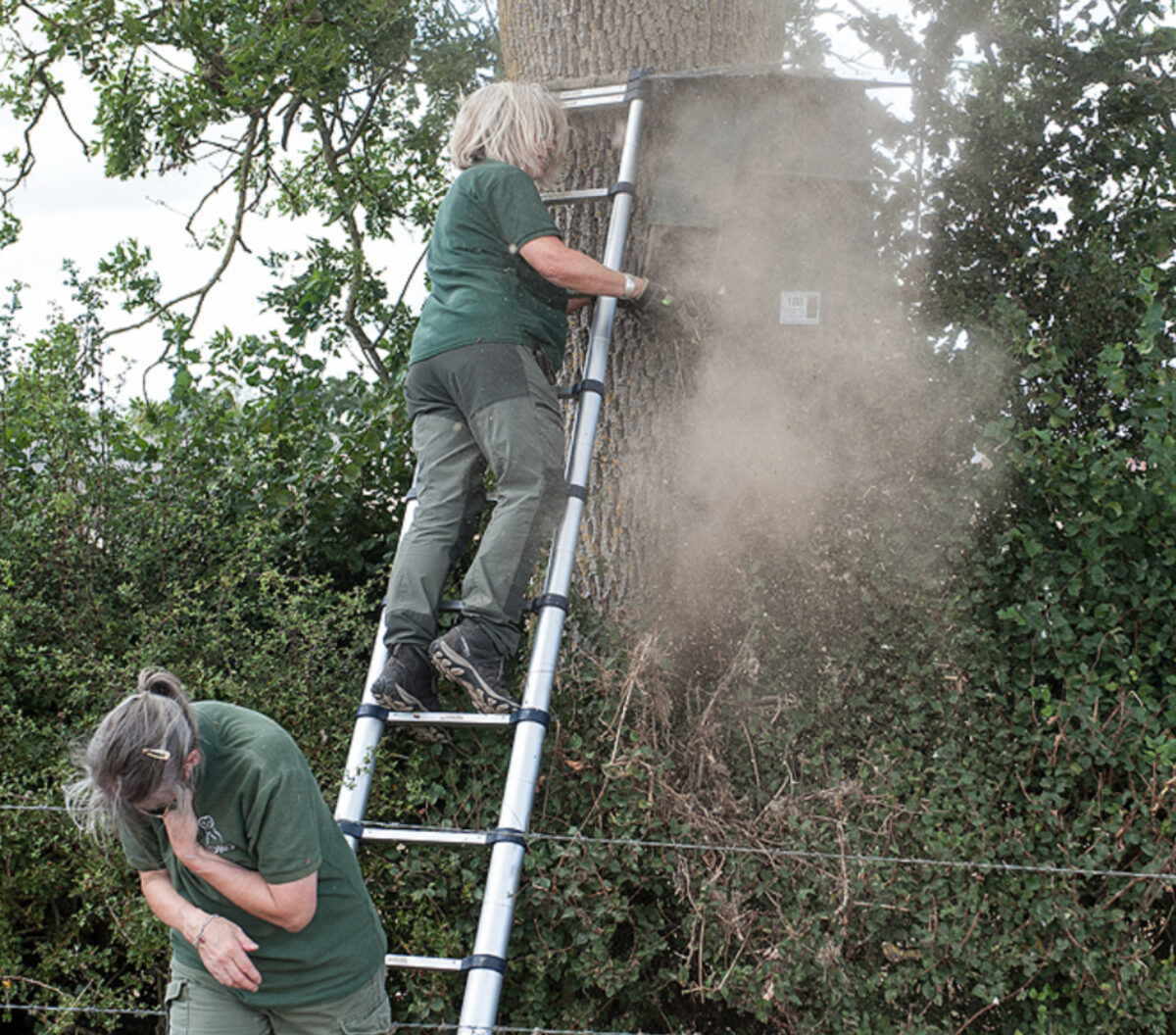
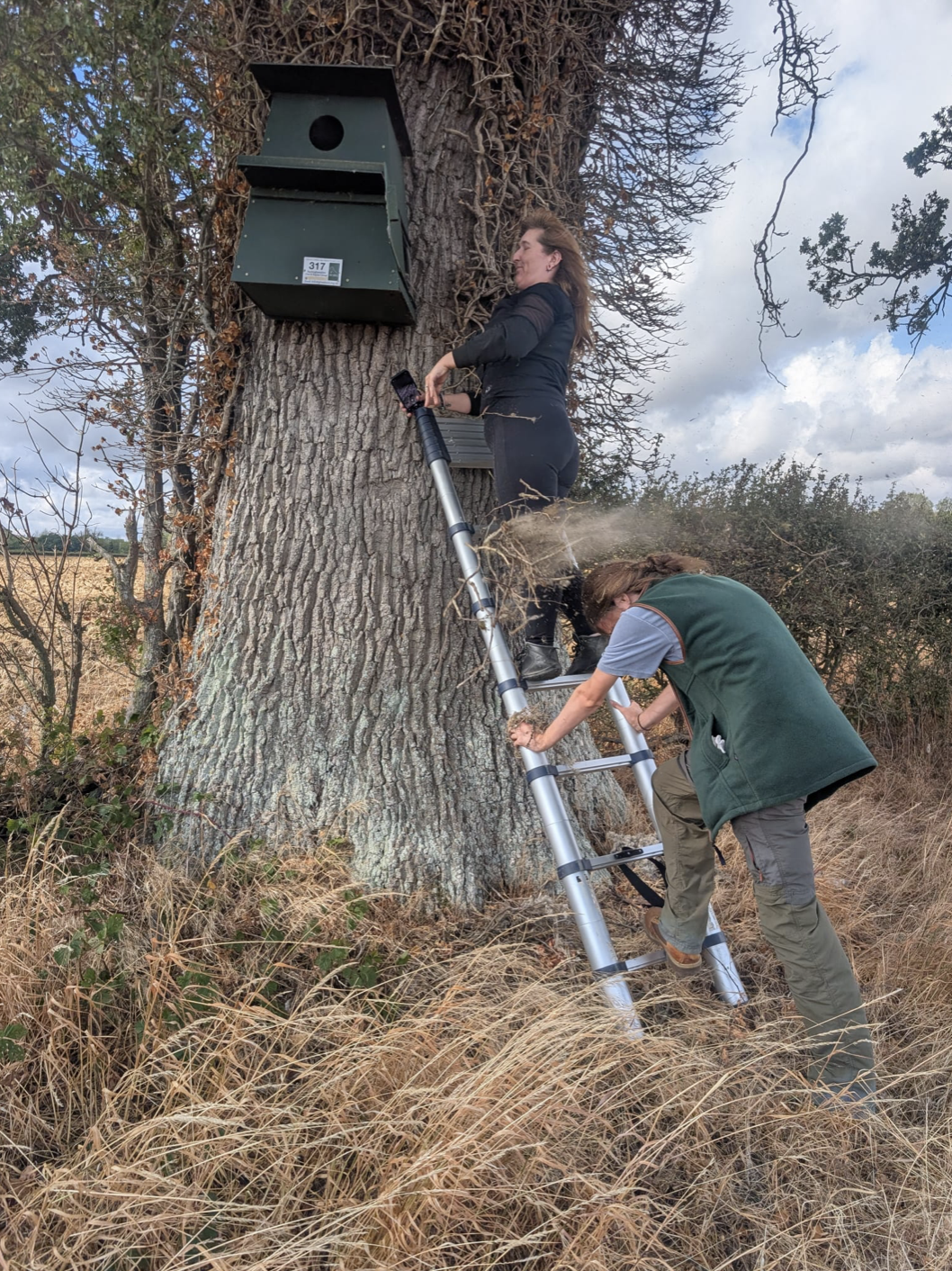
It’s only fair to add that after the long shifts our volunteers experienced in the first part of the summer, and with bird welfare in mind as well, we have all been perhaps a little less inclined to go out in a heatwave to check boxes for second broods. My own typical experience for August was a day out with Karen, Lynne and Leo, finding empty boxes needing maintenance, including moving a Kestrel box and Lynne cleaning out a particularly dusty barn owl box (pictured). That became something of a theme for the month as new volunteer Kelly gave Toby a dust shampoo (pictured).
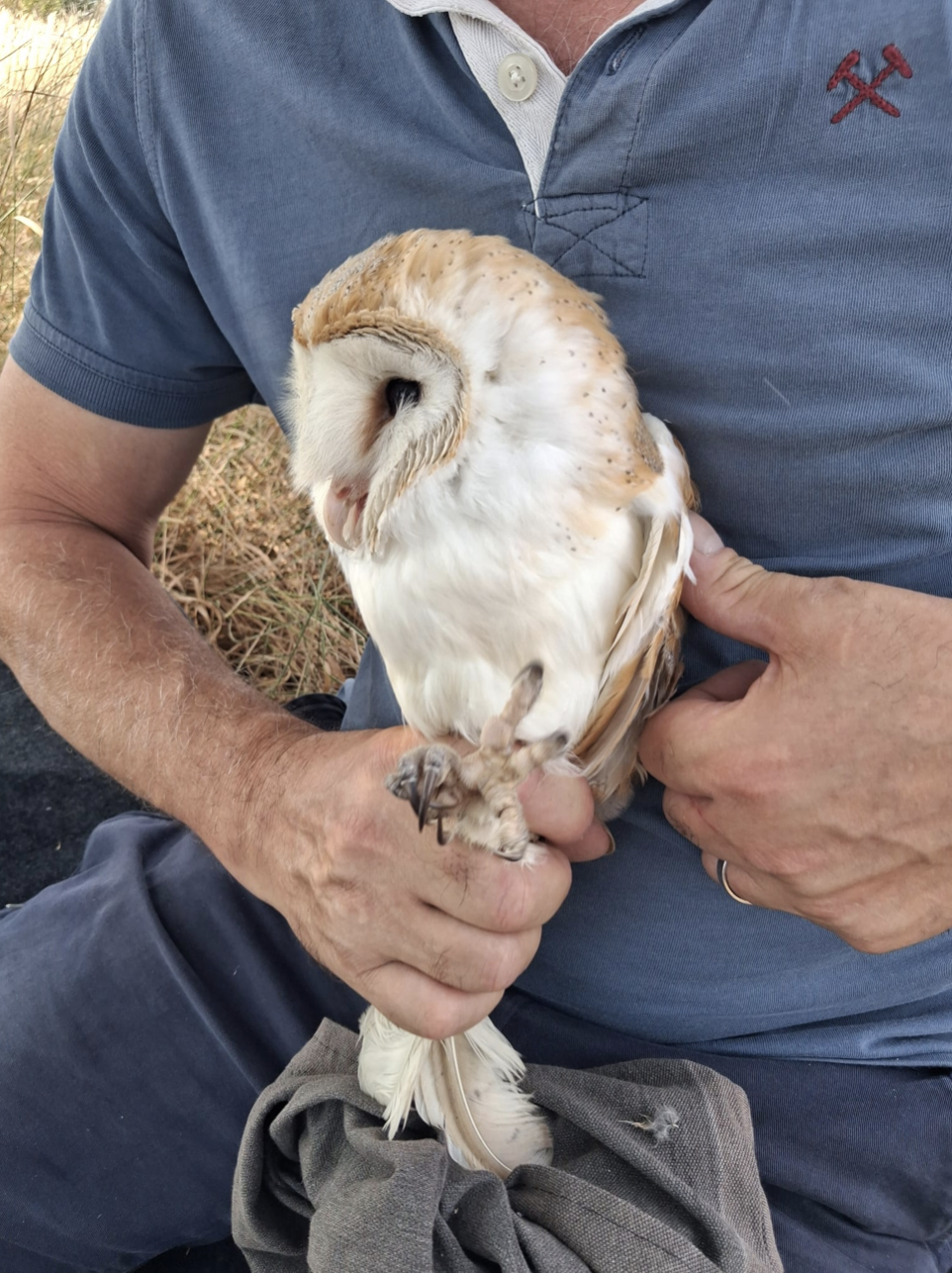
We have continued helping with release of rehabilitated Tawny Owls from our local wildlife hospital, as discussed in July’s blog. Mike and Miles undertook one release and, while on site, were able to re-check a nearby Barn Owl box, which had been home to a successful brood earlier in the year, and found a healthy unringed male in residence.
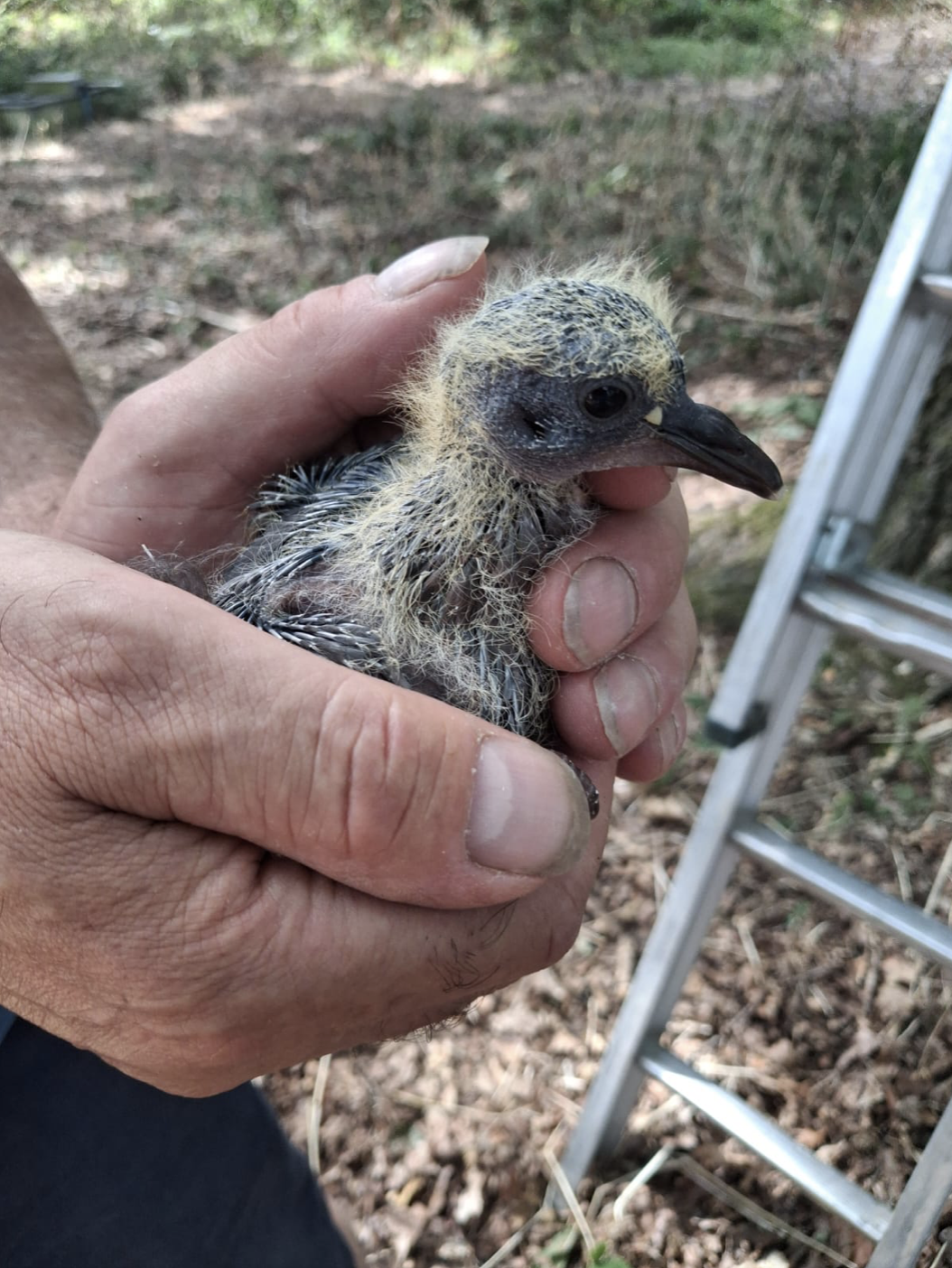
They also found Stock Dove in another box on site, and so were happily able to show the daughter of the landowner, who had accompanied them, three different species of birds in hand on a single day.
There’s no doubt one of the benefits of the work we do is being able to share sight of the birds we handle with the folks on whose land the boxes are sited. We ask landowners to pay for boxes, from which we make a small profit which goes back into funding our operations – maybe more on this subject in a future blog – and it’s very satisfying to be able to share the results. Barn Owls are Schedule 1 listed, of course, which means only Schedule 1 licence-holders and their nominated assistants may disturb them during the breeding season. The other birds we deal with are not on Schedule 1 but all birds in the UK have a level of legal protection – see, for example, this RSPB summary. Many landowners tell us with pleasure of seeing wild birds in flight around their property, but the best opportunity they have to see these birds close up is during our monitoring.
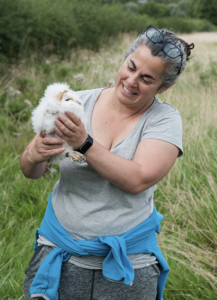
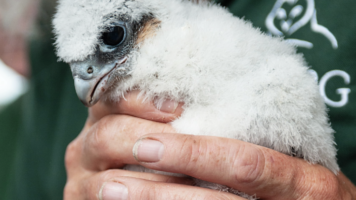
As the team photographer I am a bit wary of what we call “trophy shots”, but being able to put a wild bird – especially a chick – into someone’s hands invariably provokes a very positive reaction which makes for a photogenic expression on the face. That reaction is crucial – if we are asking people to help us protect owls and raptors, being able to show them the results seems only fair. And yes, I will supply a picture to help cement the memory! The sample here shows, with her permission, our landowner and volunteer Instagram account manger Kate, delighted with a Barn Owl chick on her farm a few years ago.
An annual highlight for us each August is the Bucks County Show. We have been fortunate to be able to attend for a number of years now; it remains the single best opportunity during the year to talk to a large number of landowners and interested parties. Special thanks to Andy for sorting it out with the organisers for us, and to Paul, Mark and Nick for supporting him on the morning shift. Lynne, Toby & I covered the afternoon, with volunteer Leo putting in an appearance to check up on us. Despite gloomy forecasts – including a specific warning during the afternoon of a local electrical storm which led to a flag-bearing cherry picker being lowered as a precaution – the rain was relatively slight and we were able to pack up in the dry. We spoke to many folks throughout the day and came away with a number of leads for potential future box installations.
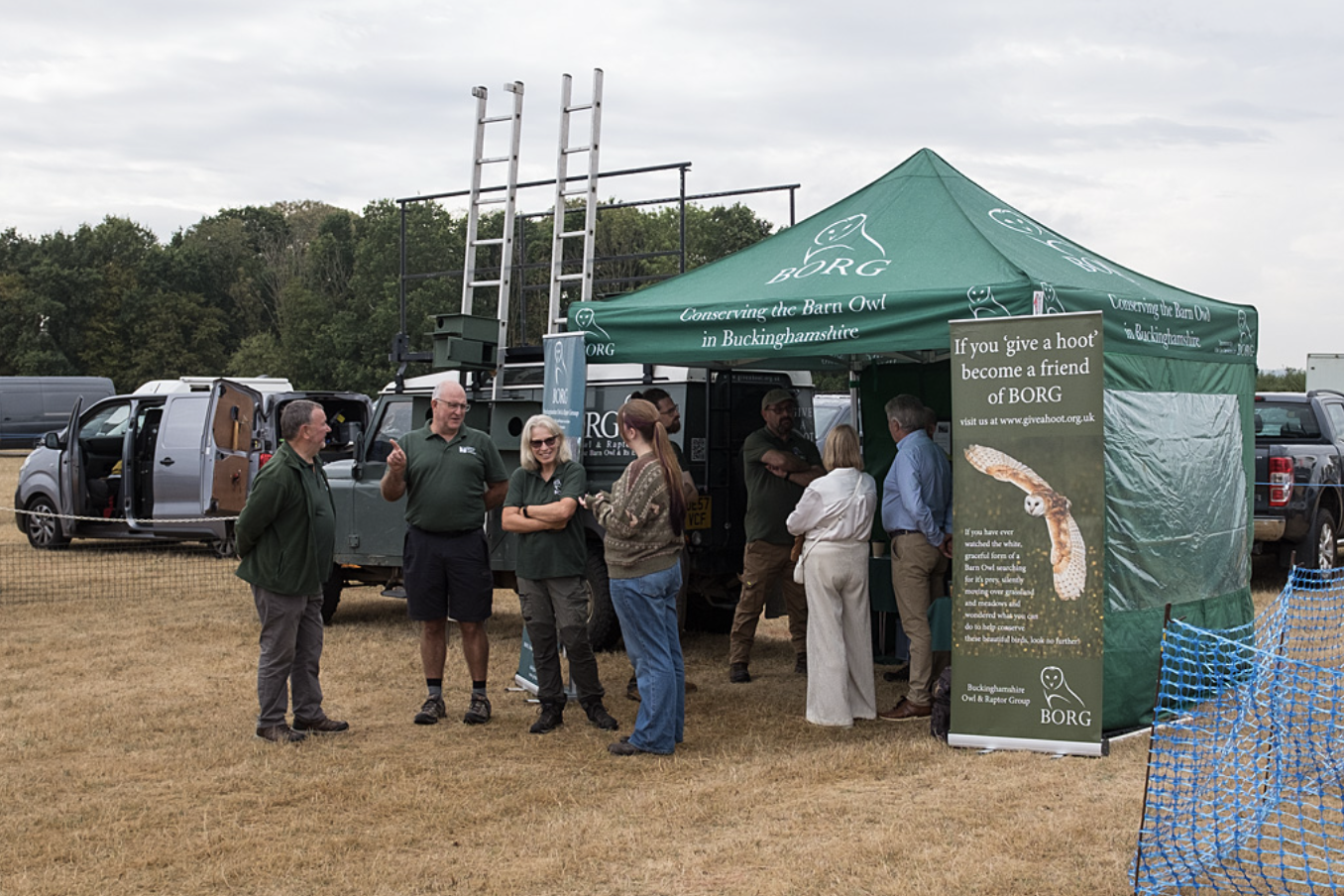
I’d like to give a special note of thanks to Vale Tyre Services, who very kindly funded a striking new gazebo for us last year, the roof of which not only looks great but is also waterproof! Thank you.
Finally, I couldn’t resist sharing this BBC story of a slightly off-course Barn Owl recovered 70 miles off the Norfolk coast this month. Just when you think you’re beginning to understand a little about bird behaviour, they surprise you all over again!