
In case anyone hasn’t noticed, July has been a trifle warm. I’m old enough to remember the long hot Summer of 1976; this year bears comparison. The difference is that 2026 is just another hot Summer among many, not the relative outlier of half a century ago (the Summer of 1975 was hot too, but otherwise surrounding years were unremarkable). Climate, they say, is what you expect; weather is what you get. By that definition alone our climate has undoubtedly changed. What is it all going to mean for owls and raptors? After a brilliant couple of months for raising chicks, a decent-sized population of youngsters now find themselves amid a fierce drought. Survival is going to be tough.
Whether it be through lack of food, loss of parents, or direct injury, the first few months of life are hazardous for any bird. According to the Barn Owl Trust, more Barn Owls die as juveniles during dispersal from the home nest than at any other time. Some can be helped, however. Our friends at a local wildlife hospital rescue and look after suffering wild animals of all shapes and sizes, always with the aim where possible of returning their charges, when sufficiently recovered, to the wild. BORG is proud to be able to help with the release of recovered owls using those of the boxes we monitor which we know to be empty at the time.
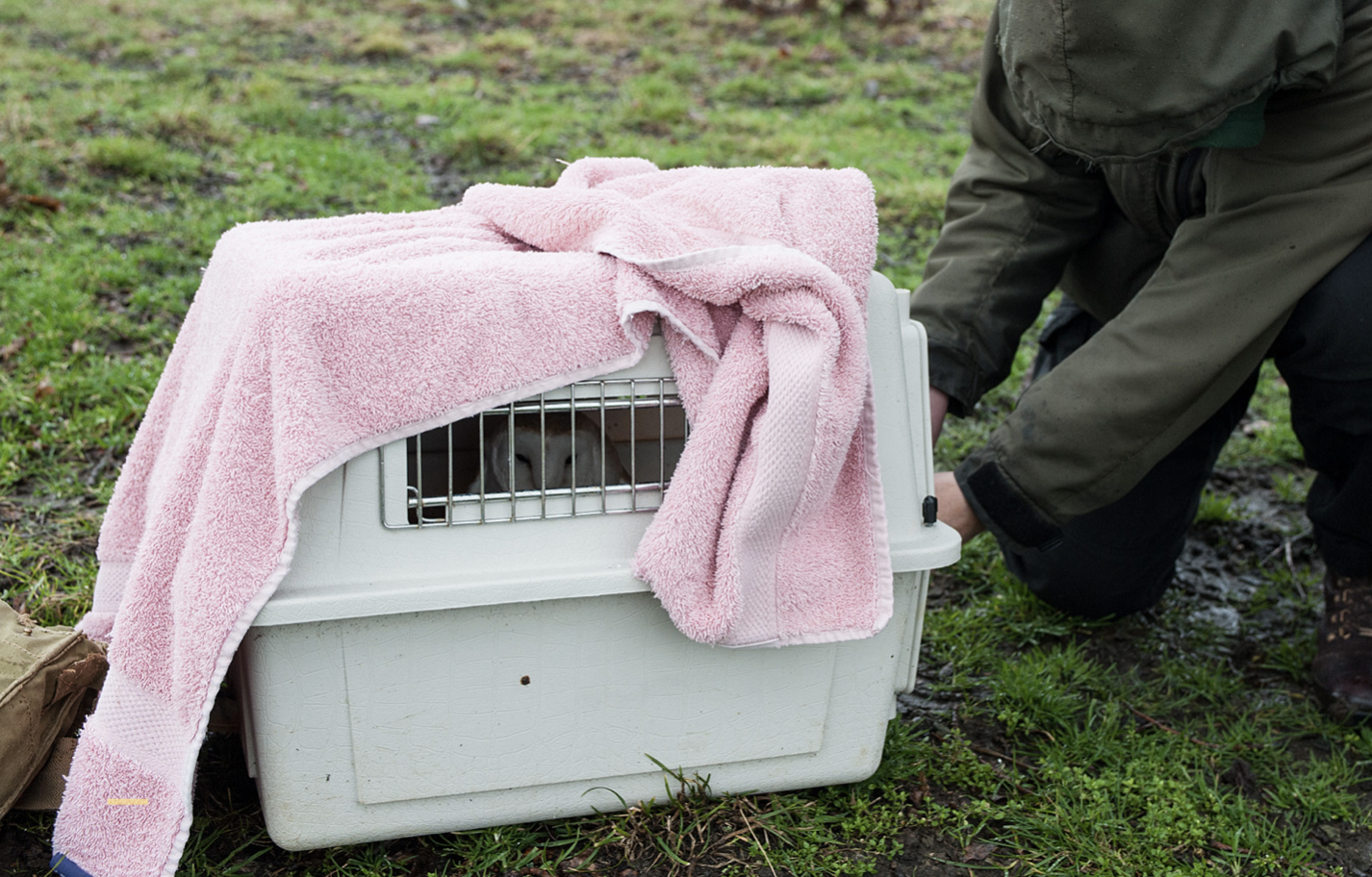
With ringing of first-brood chicks already largely completed for this year, in July we helped release rehabilitated Tawny Owls, Barn Owls and Little Owls over several different days and across boxes in multiple locations. I recall the first time I witnessed such a release, several years ago. I had the naive expectation that the newly-liberated bird would spread its wings and fly from the hand, suitable music (“Born Free”, perhaps) running as the soundtrack in my mind. The truth turned out to be considerably more prosaic. The idea is to give the bird somewhere relatively safe in order to acclimatise to its release site, which it may be seeing for the first time. So it’s taken out of the box in which it has been brought to site, and placed (gently but unceremoniously) into a vacant nest-box (with enough floor substrate to make it comfortable), with the exit hole blocked for a short while in order to give the bird time to settle down after the journey. Then over the next few days we provide supplementary feeding in the shape of dead mice or similar, reducing the amount over time.
In practice it’s difficult to establish how successful a release has been. Owls need a fixed location like a box when raising their young. Thereafter they may use that same location as a roost, or they may not. Add to that the fact that we have limited ability to monitor a box over a period of time. We have a limited number of trail cameras, which can help, and of course during the initial few days of supplementary feeding it is possible to determine whether the food we provide has been taken – though not necessarily by what. Ringing released birds would obviously help if those rings were ever found. But our empirical observations so far suggest that released birds do not stay close to the release site for any appreciable amount of time. We wonder whether perhaps a less abrupt transition from captive to wild may be beneficial, but we do not have the resources to create a “soft-release” facility, which would require large cages (which can be opened over time) in appropriate habitat, and constant management during the release period. So for the time being we are doing the best we can, and keeping our fingers crossed.
It’s also worth noting that nearly 80% of the birds we helped release this month were Tawnies. There are more of them to start with, and they breed earlier in the year so the number of chicks out and about is likely to be a little larger than for other owl species, but we suspect there may be something else at play here. As they first leave the nest, Tawny chicks tend to stay close by in behaviour known as “branching”; they literally sit on branches close to the nest. Here they continue to be fed but are starting to get experience of the wider world. That can include them ending up on the ground, from where they are pretty good at getting back into the tree. But that’s not necessarily obvious to the observer. As the Barn Owl Trust note, “If you find a young owl on the ground it’s important to identify it as what you need to do will differ depending on the species. If it’s a young Tawny Owl, then it probably isn’t in trouble and doesn’t need rescuing. If it’s a young Barn Owl the advice is completely different and it almost certainly does need rescuing and putting back in its nest.” How many Tawny chicks are “rescued” unnecessarily? It’s hard to say. But the disproportionate number involved does suggest it’s a factor.
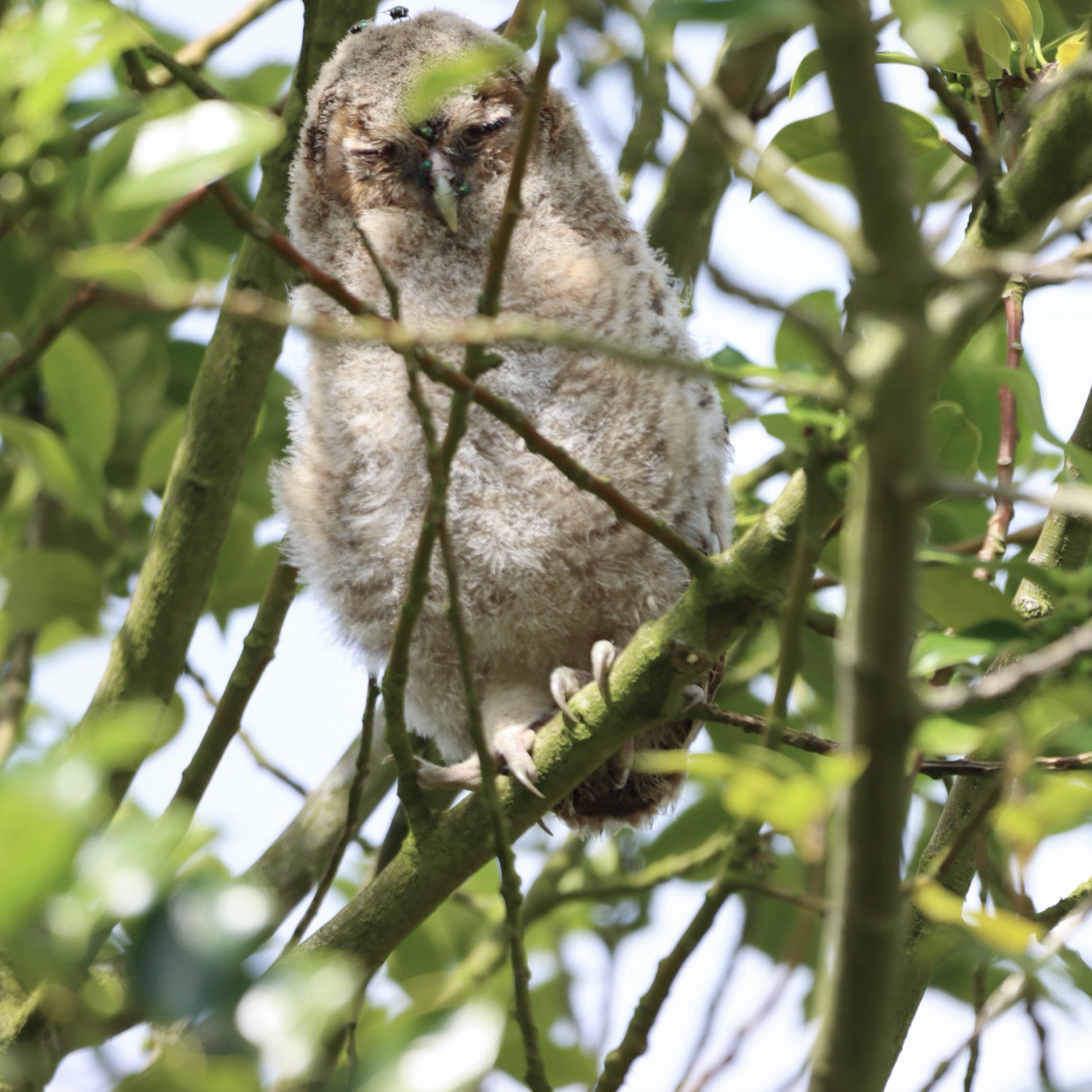
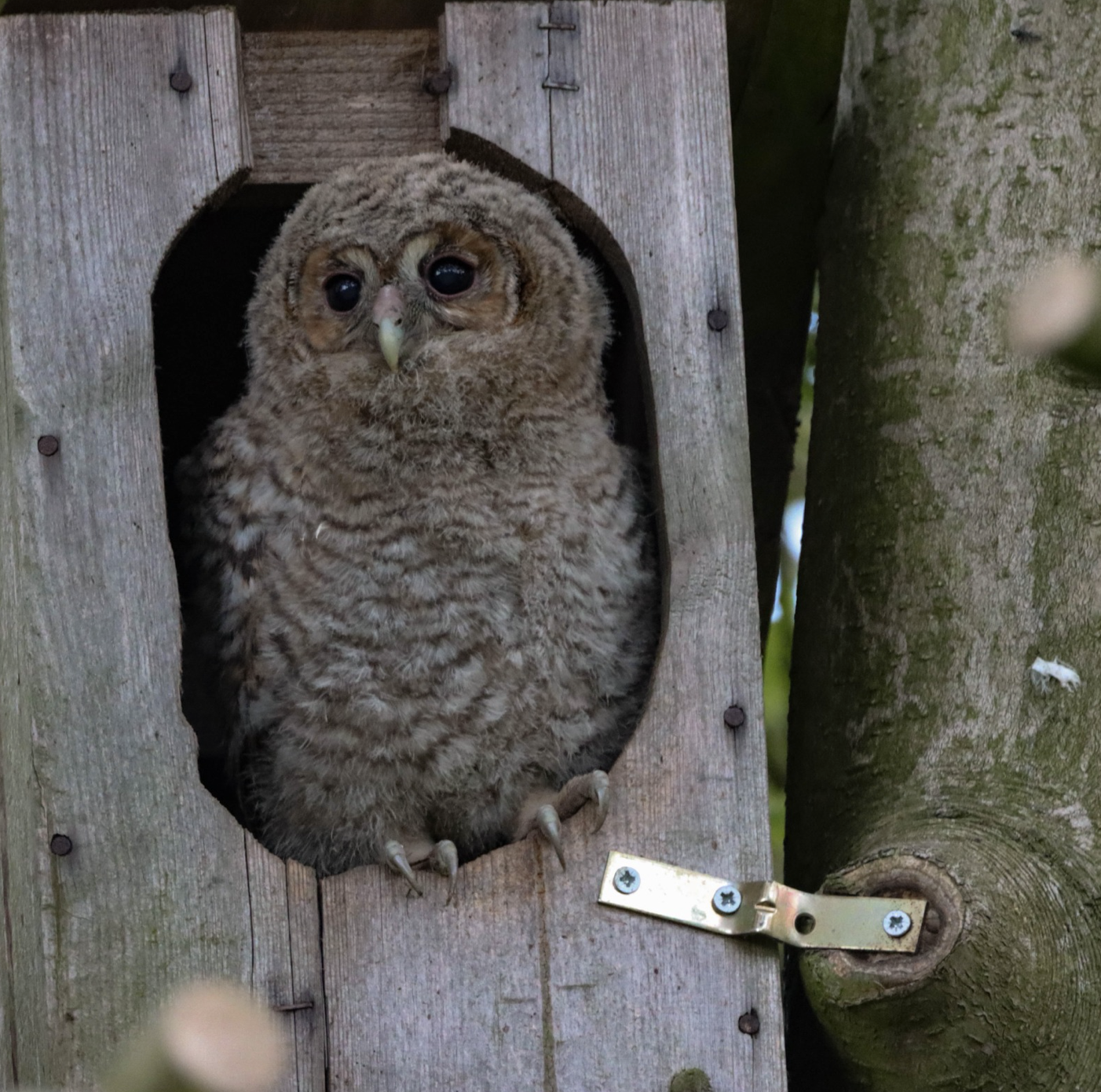
While on the subject, we heard from one of our landowners this month who was able to see and photograph an adult Tawny with two chicks at this “branching” stage, in and around the nest box. Thanks to Al for the pictures!
Our most astonishing story this month concerns the ups and downs of one particular Barn Owl brood. One of our landowners, John, found a dead adult male Barn Owl near the nest box in his barn; he suspected its family was still active. Claire & Martin visited and found one dead chick, near fledging size, and others which were still alive but very thin and with empty gizzards. They provided John with frozen mice and day-old chicks which he and his family put out regularly for the adult female, close to sites where whitewash (poo) showed she was obviously roosting. Claire visited regularly to check on progress and found the chicks’ weight steadily increasing, interestingly with the smallest (usually the last of a brood to be fed) always with a full gizzard.
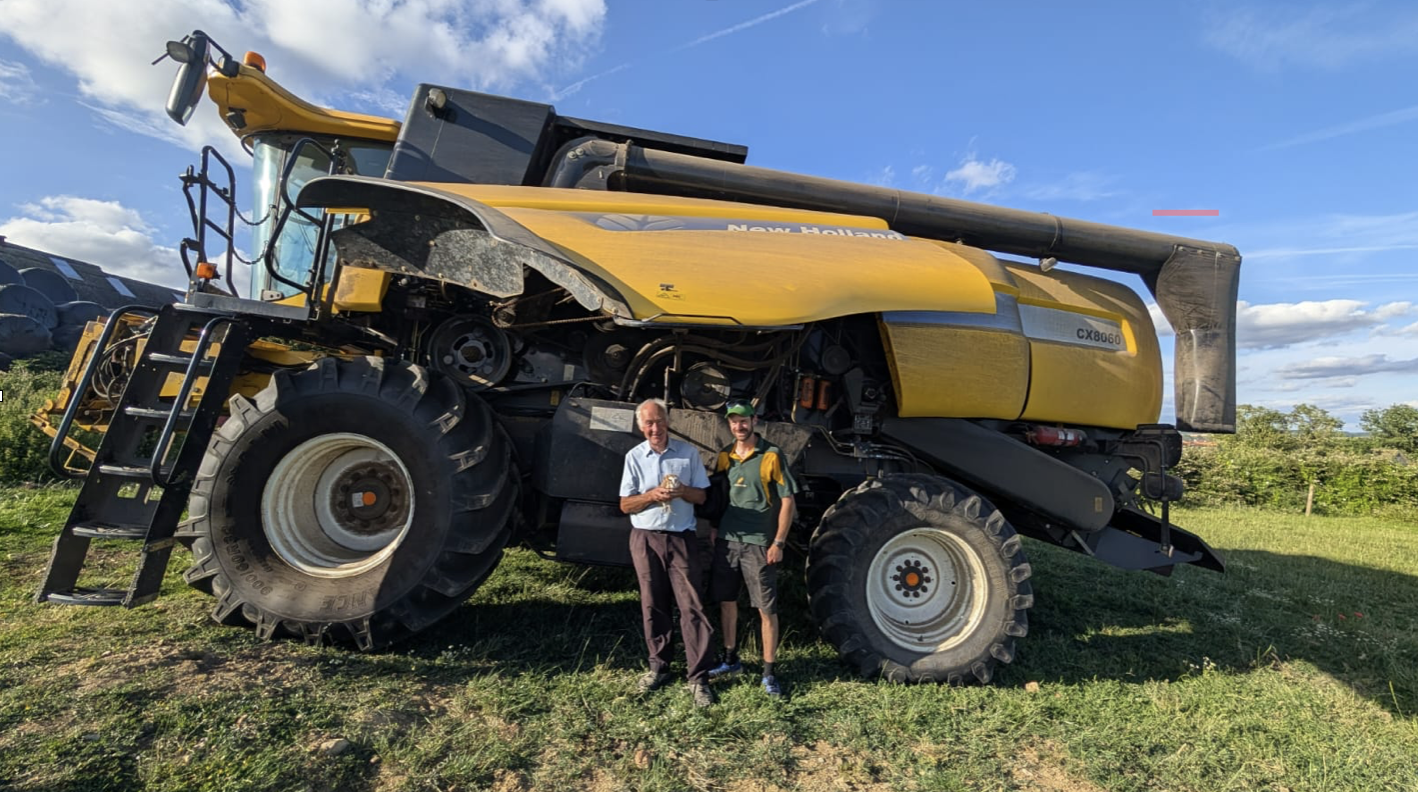
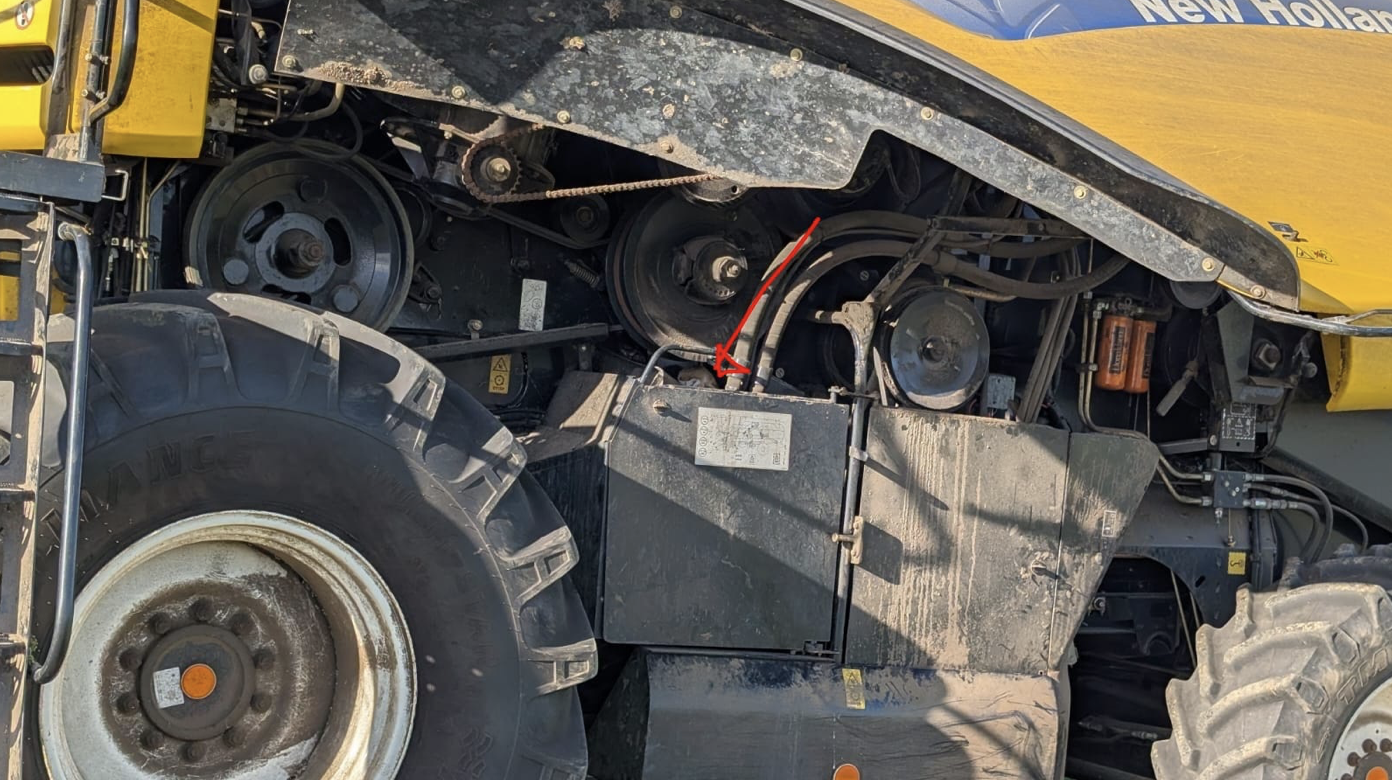
Some weeks later, John called to let us know that his son Richard had driven their combine harvester about 10 miles away to gather the harvest on another farm. After 3-4 hours work, he opened one of the side panels on the combine and discovered a young Barn Owl inside! Clearly one of the brood from their farm, it was still young enough to have been heavily dependent upon its mother for food. After discussion with Claire, John & Richard spread pigeon netting around the open combine to contain the bird if it attempted to fly. When Claire arrived the owl was still secure and she was able to take it in hand, and from there return it to the nest box from whence it came. Quite a day out!
There is a lingering concern as to whether several hours inside a combine harvester would have affected the chick’s hearing – Barn Owls hunt by sound so hearing is crucial to their survival – but we can only hope for the best.
In the end John and his wife provided food for the brood over a period of about 6 weeks; raising a family is a huge challenge for a female owl on her own. The result has been four well-grown chicks (2 male and 2 female), which is a remarkable achievement. We are very grateful to John and his family for their dedication and quick-thinking which turned around the fortunes of this Barn Owl family.
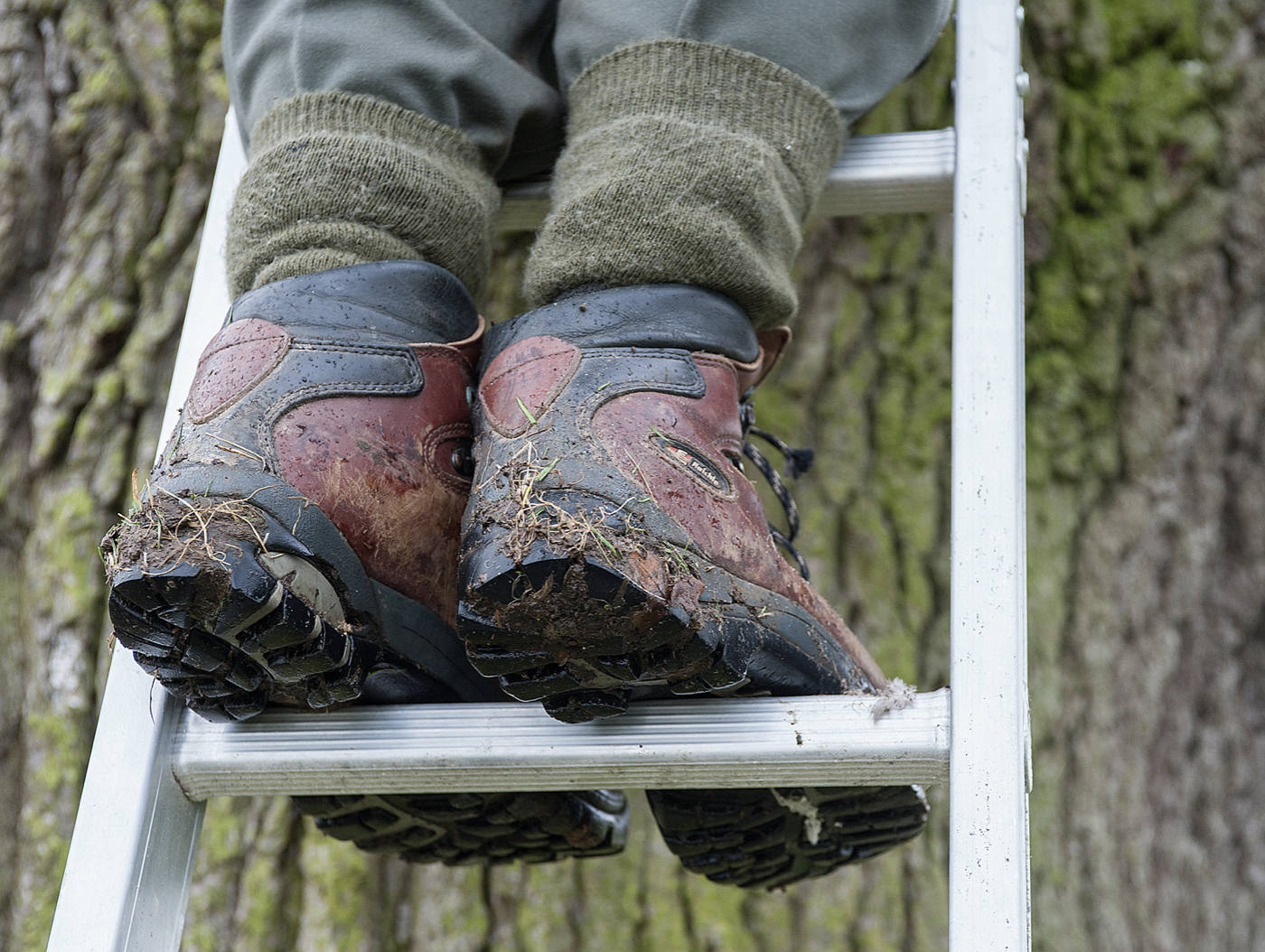
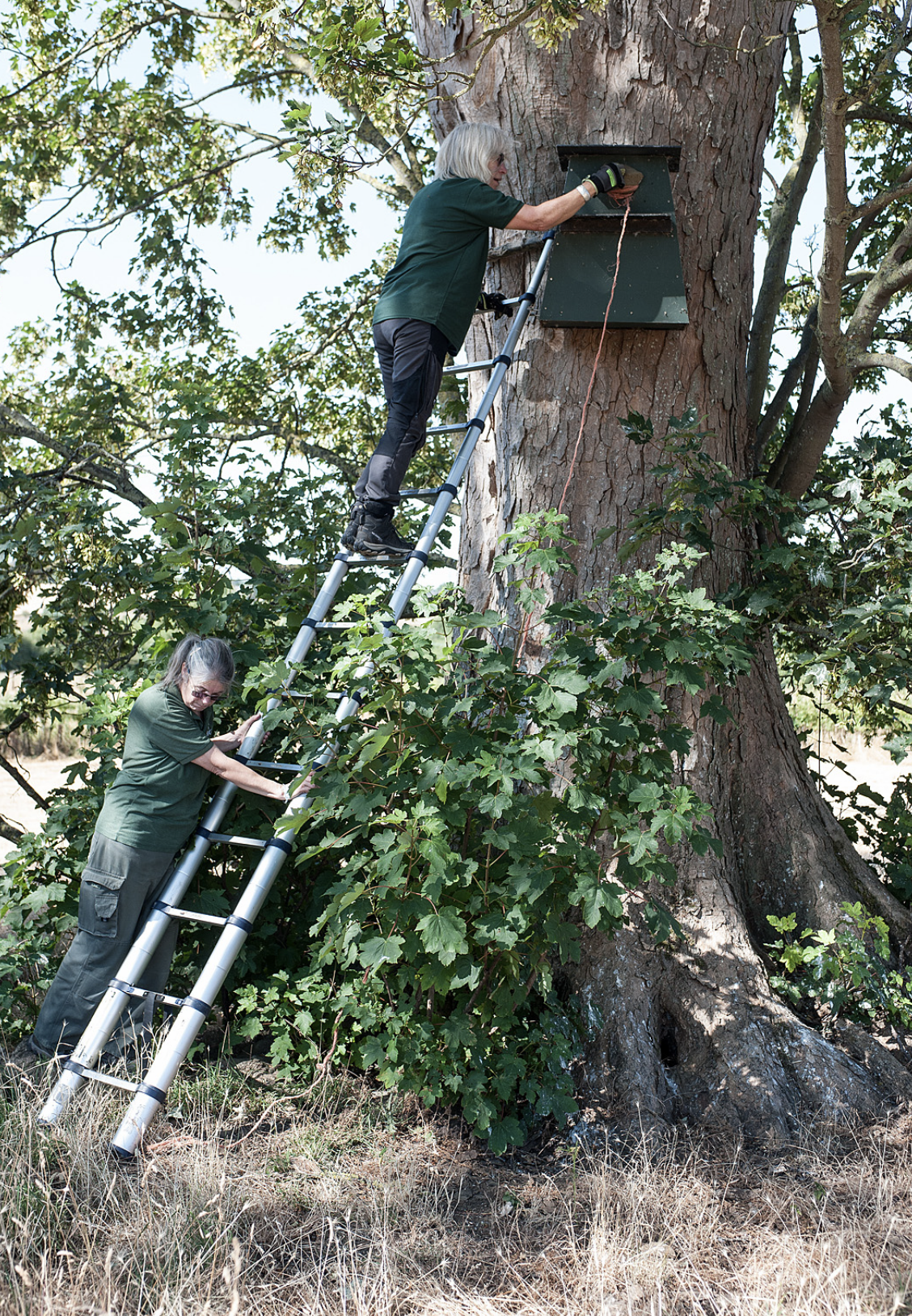
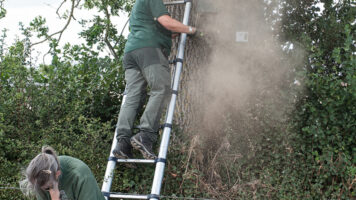
A thought on safety. Our activities mean that we use ladders on a regular basis in order to install and to access nest boxes located typically several metres off the ground. Occasionally we are lucky enough to have the luxury of a farmer’s lifting device (such as a telehandler) but the norm is a ladder, propped up against a tree or in a barn. We use two principal types: collapsible ladders which are easy to transport but reach maybe only 3-4m, and a fixed two-section ladder, carried on the Land Rover roof-rack, necessary for boxes at greater height such as Kestrel boxes (which work best for the birds about 5m off the ground).
We had something of a “near miss” recently when one of our volunteers stepped a few rungs up a collapsible ladder on which someone else was working, in order to hand up a tool. We’ve probably all done it. But that is strictly against safety guidance for such ladders – one person only at a time – and it was pointed out to us by a safety professional on the local estate on which we were working. Good call. So we have taken the opportunity to draft a new ladder safety policy for the team and intend to use that, when finalised, to introduce more formal briefings for us all, as well as improving our regular checks on the condition of the ladders we use. It’s based on the excellent Health & Safety Executive advice, here.
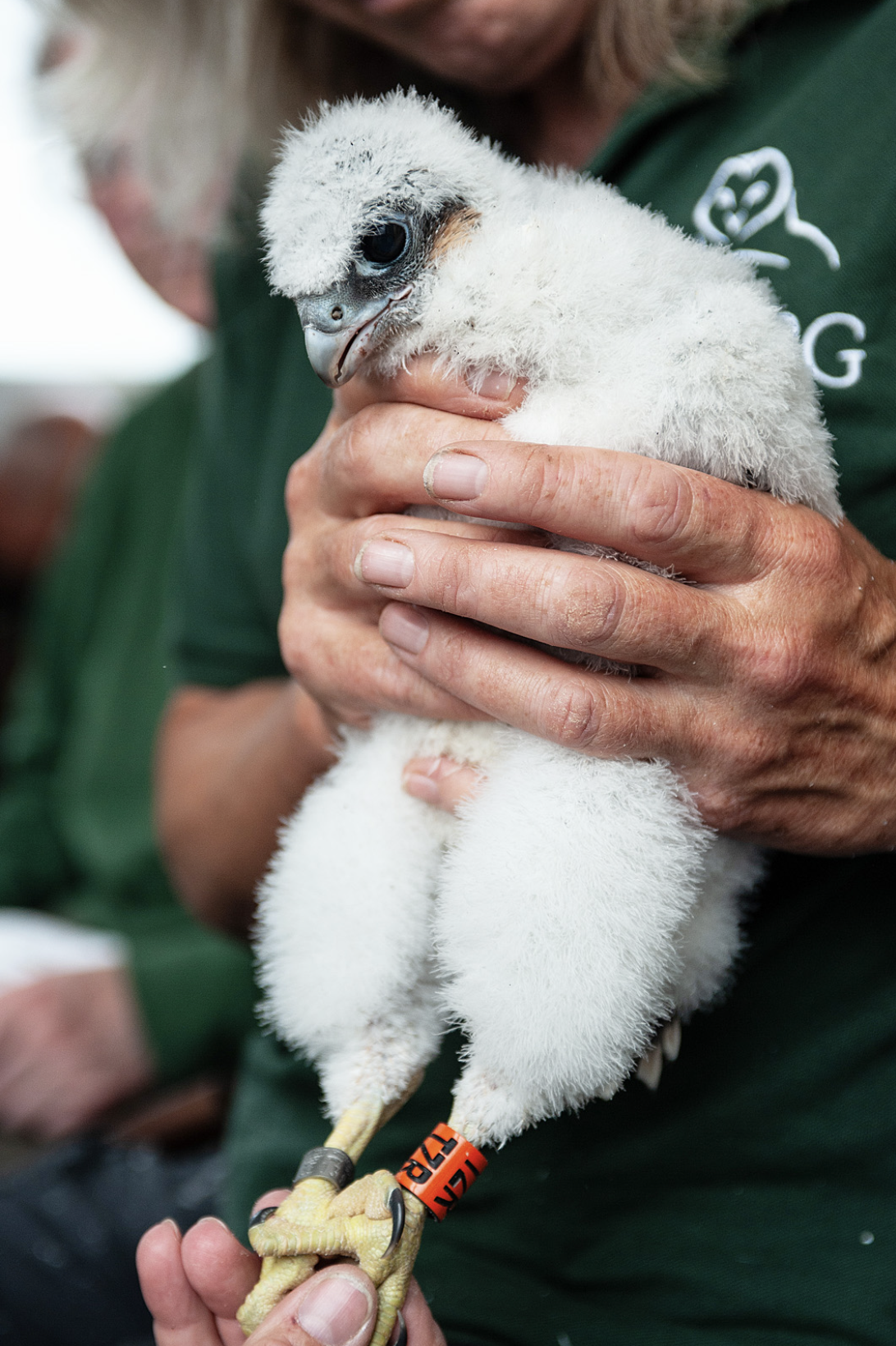
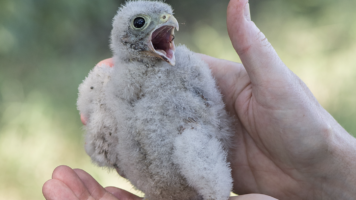
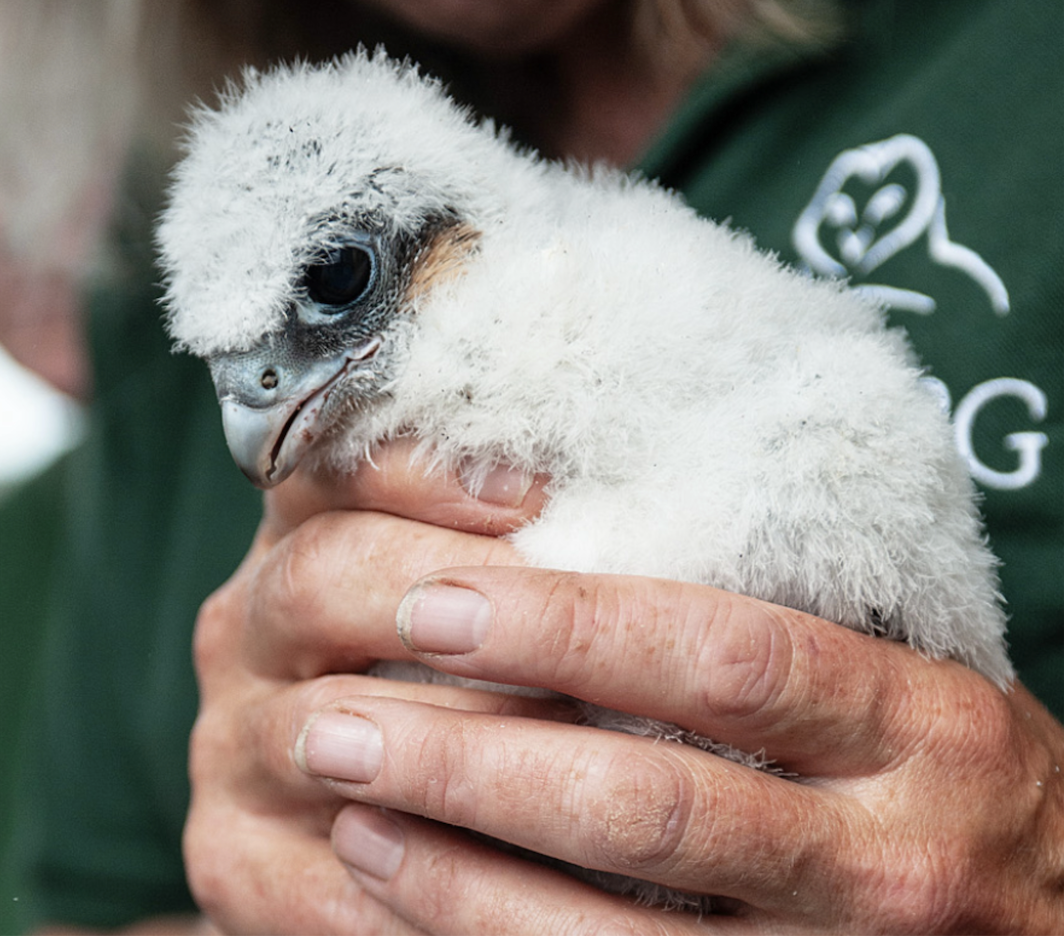
Finally, some very cheerful news. I mentioned last month that we had decided not to ring Aylesbury’s peregrine chicks this year as they were already stressed out over the hot weather. We have, however, had news about one of last year’s chicks. We fitted them with both standard BTO metal rings and highly-visible “Darvic” rings, which allow identification from a distance (typically via binoculars or long lens). One of the brood, ring number TZR, has been positively identified on and around a church steeple in St Ives, Cambridgeshire. This is impressive, but it’s by no means exceptional. Young Peregrines typically migrate some distance from their breeding location; the species name (Falco peregrinus) comes from the Latin for “coming from foreign parts”, as birds formerly used for hawking were typically taken on their passage from their breeding place, perhaps because accessing the parental nest – typically on a rocky cliff – was difficult and dangerous. The word “peregrination” – travelling from place to place – shares the same root.
Wishing you safe peregrination until next month.