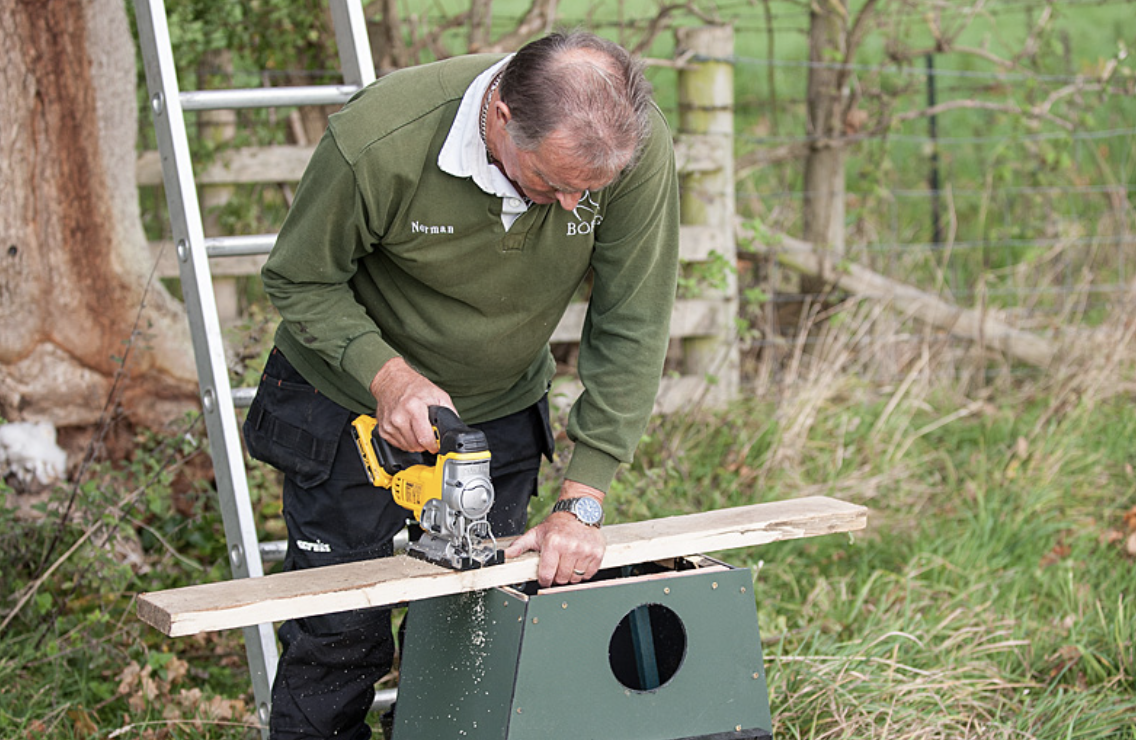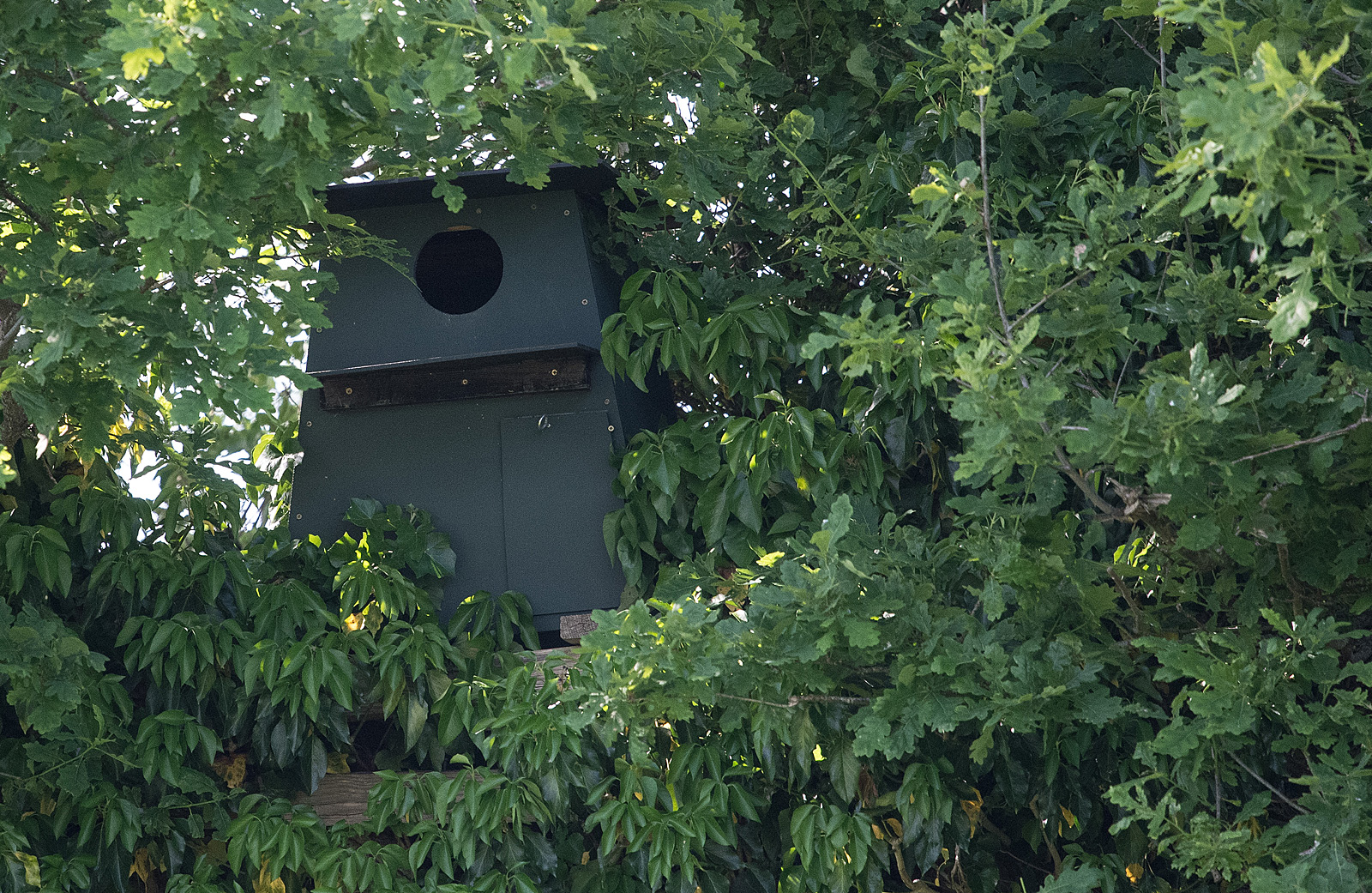
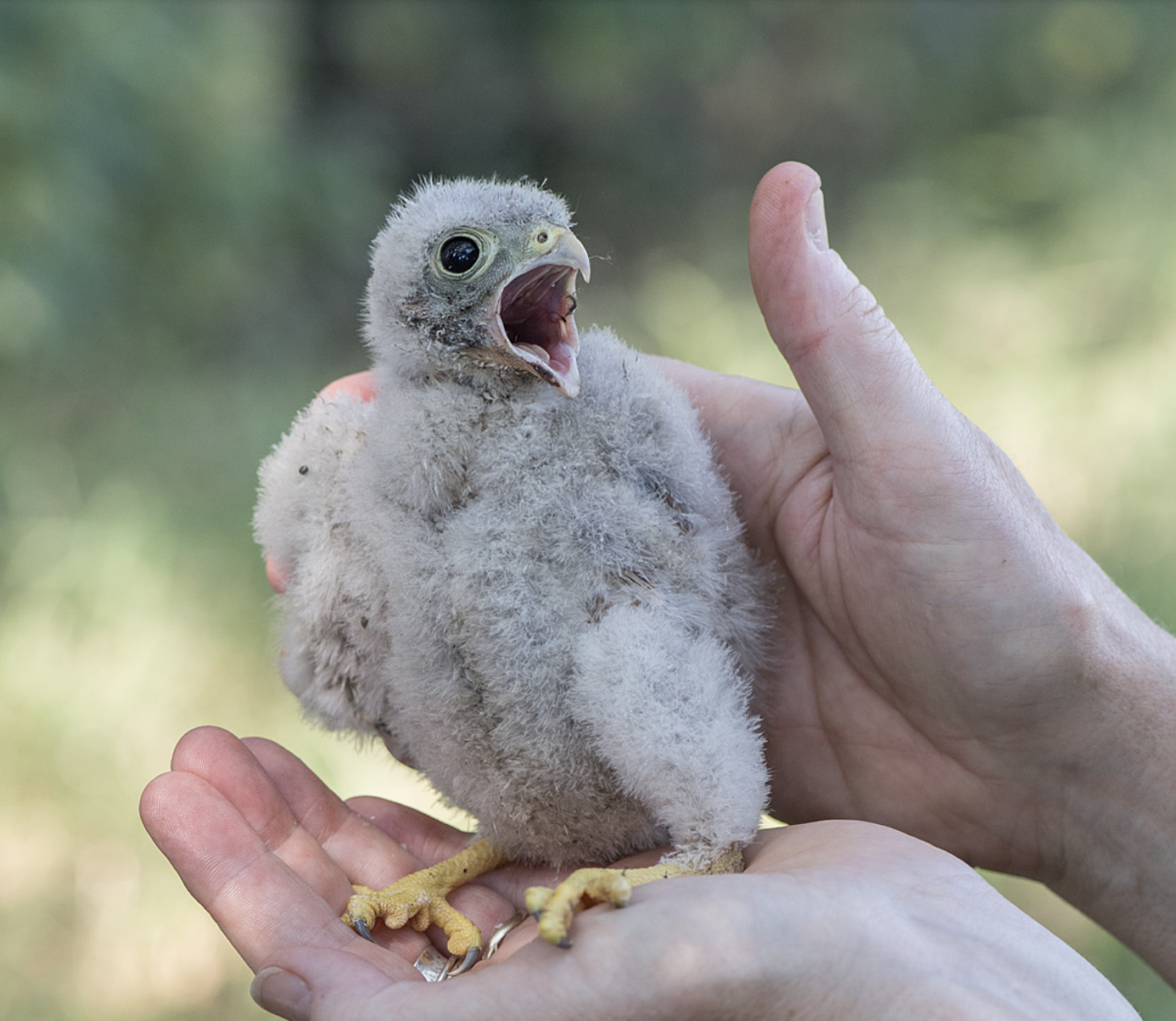
Tawny Owls breed earlier in the year than the other species on which we focus; our work on monitoring and ringing them this year is all but done. So we shouldn’t be concerned that in June we ringed precisely zero Tawny chicks; we weren’t looking for them. But, as for Barn Owls… an informal tally from the group’s WhatsApp chatter reveals that we have ringed 68 Barn owl chicks this month alone. On one memorable day in the first week of the month, Claire, Lynne and Martin ringed 19 – nineteen! – chicks from six boxes, throwing in an adult Barn Owl, 4 Kestrel chicks and 2 Jackdaws for good measure. To add to the delight from that day, at one farm there were three boxes available – a “classic” triangular plywood box, an old wooden “kennel” box and a BORG-supplied Stokbord box. The birds had the good taste to have chosen our Stokbord box.
On another day we ringed five chicks at a BBOWT reserve, which turned out to be the first Barn Owls on that reserve in at least five years.
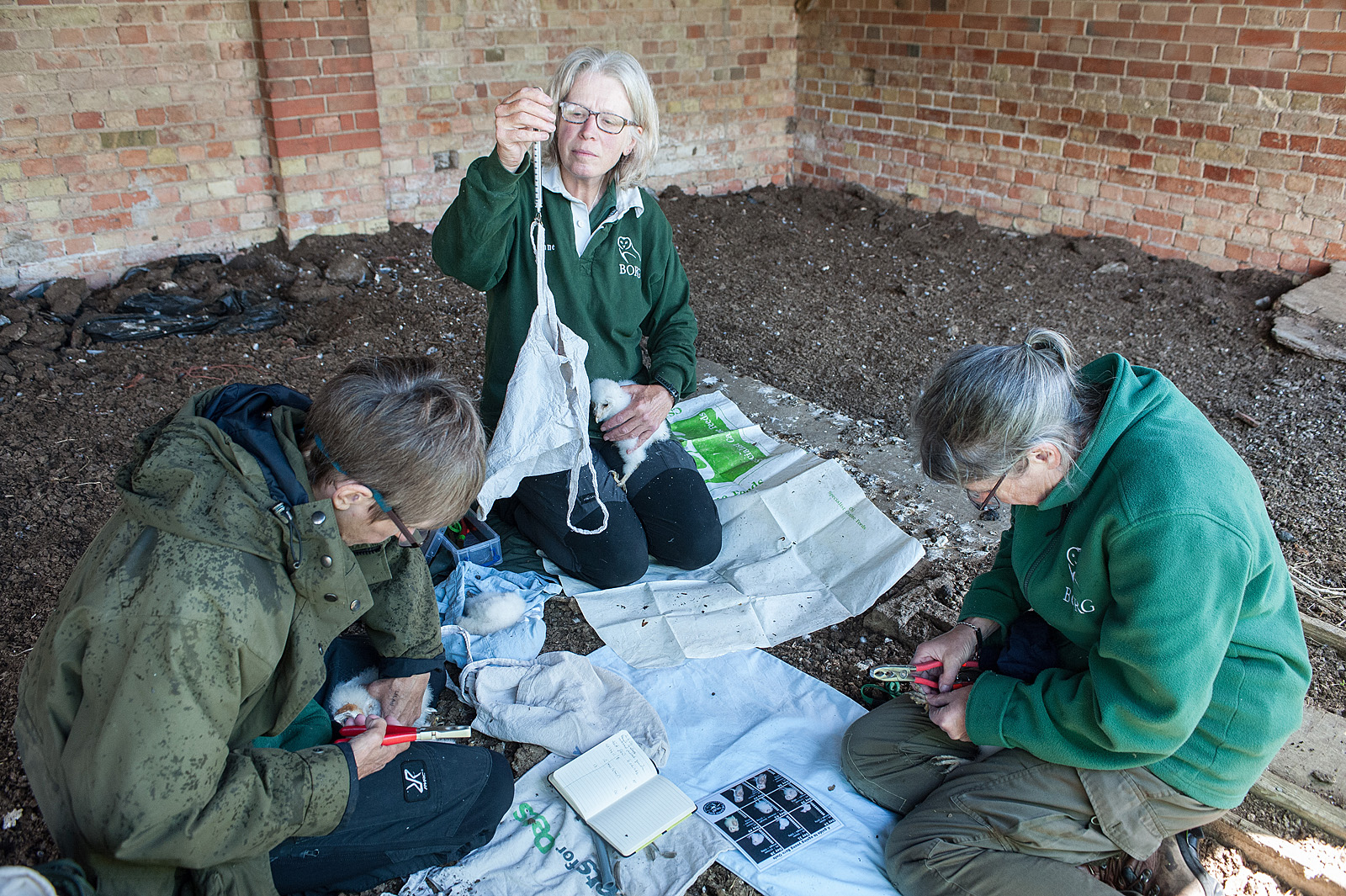
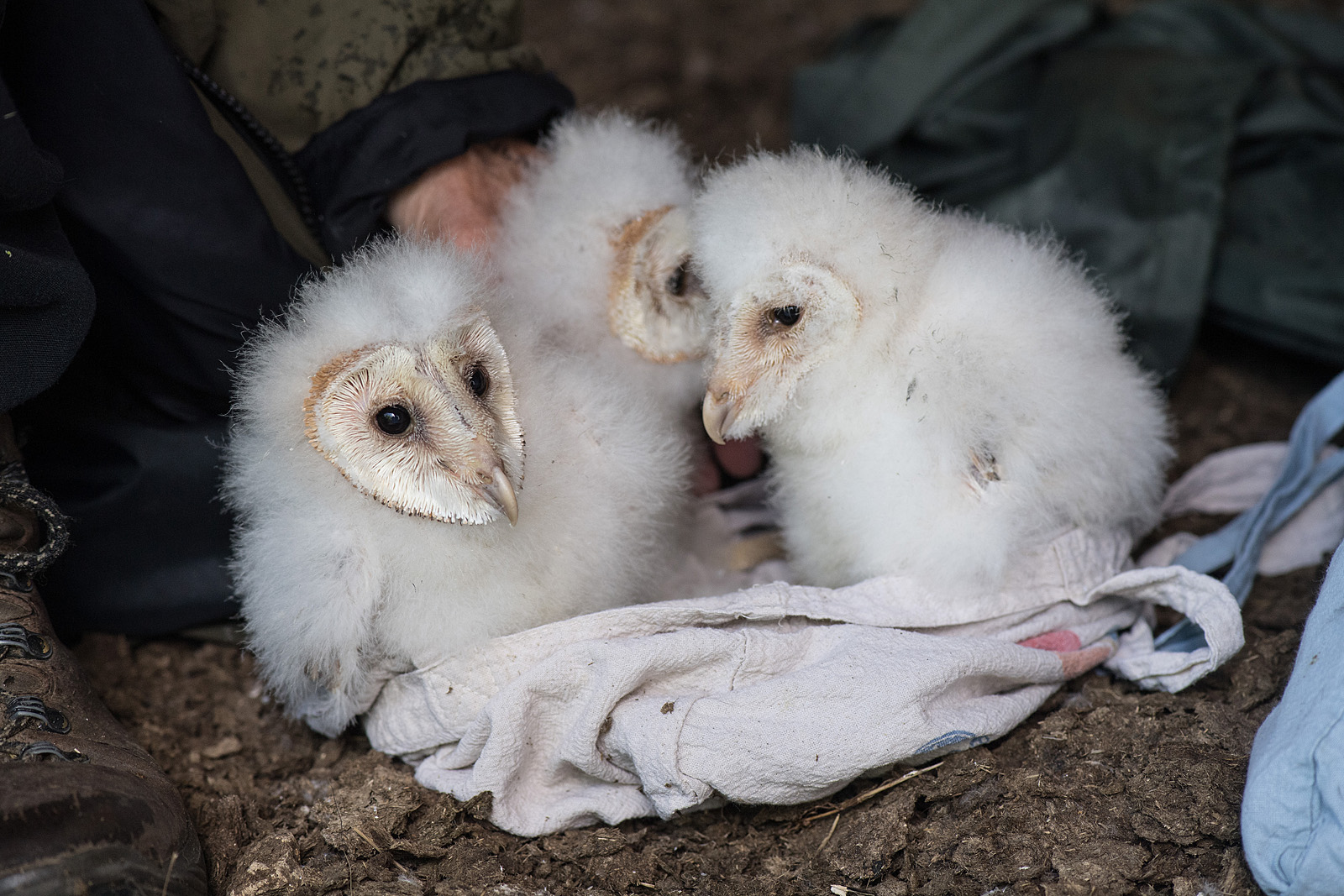
It’s maybe worth contrasting the joy these numbers bring with a little insight into the downside. When Barn Owls breed, typically the male adult moves out of the nesting location and finds a roost nearby – it’s one of the reasons we often site two Barn Owl boxes close together. As the chicks grow, the female adult often follows suit and leaves them alone in the nest when she’s not feeding them. That’s partly so she can hunt but, brutally, it’s probably also because they stink. While Barn Owls have the habit, strange-seeming to humans, of living on top of their own pellets, they are not the problem. Pellets contain indigestible materials, largely rodent bones and fur, which evidently make for reasonably comfortable bedding and, when dry, don’t smell much. The problem is the digestible stuff. Chicks excrete directly into their own nest – they have no elegant solutions like the projectile poo out of the nest falcons perform. What they excrete, accretes. And festers. It stinks of ammonia – if you’re lucky. If you’re not so lucky, that is overlain by another bouquet.
Like other predatory birds, owls cache food when the hunting is good. We often find dead rodents in nest boxes, and sometimes dead frogs or dead small birds. While hunting remains good, the cache may be overlooked. Add in a burst of hot weather, and the outcome is easily predictable – the stench of rotting dead bodies. As a side-order, our nest-boxes also get used by other species, and not all the young survive. So an owl may brood on top of a dead Jackdaw chick, for example.
This month prompted an unofficial “smelliest box” competition among our volunteers, with several strong contenders fuelled by some or all of the above. Mike described the smell of one box as “wild”; Lynne & Martin’s entry (which hit the nose from 2m away) was fuelled by wet rotting mice, while Mark reported that the aroma of dead Jackdaw was particularly pungent.
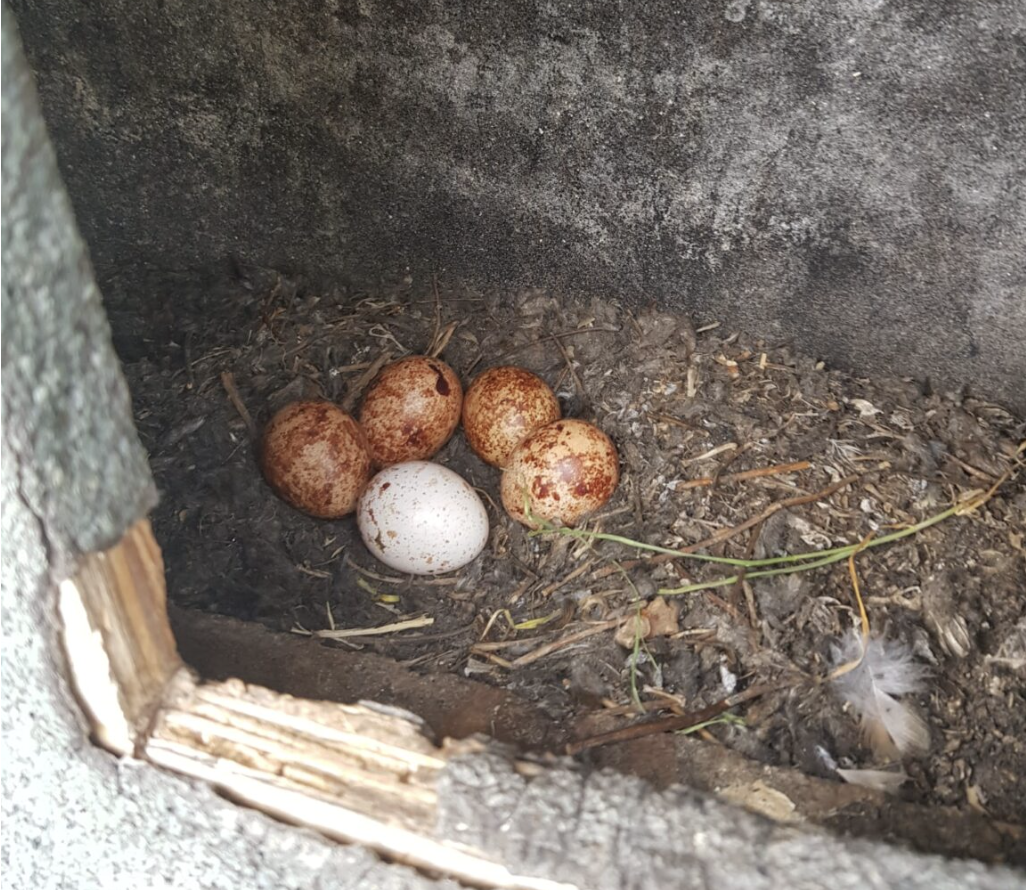
Back to happier thoughts. This month has also seen us ring 22 Kestrel chicks from 5 boxes. One box was a little strange. Firstly, the Kestrels bred in a box which had previously held Barn Owls – by no means unique, but a first for this box, which has been in use over a period of some years. Secondly, when Karen first found the five Kestrel eggs, back in late May, four were brown, and one white. We have no definite explanation, but speculate that pigmentation is diet-dependent and the female ran out of key nutrients. Alternative theories about it not being a Kestrel egg at all are pretty much scotched by the fact of finding and ringing five healthy chicks, albeit there was one distinctly smaller than the rest. Without a camera in the box we can’t know which egg that one came from.
That box led to another pleasing record of sorts. The landowner is an enthusiastic supporter of what we do and has had boxes on and around her land for many years. She has now been able to witness us ringing all four of our primary target species – Tawny, Barn Owl, Little Owl and Kestrel – albeit the Tawny was in a box just across the boundary on her neighbour’s land. We can probably say the same for clusters of boxes but I’m not aware of another single landowner who has seen all four. It couldn’t happen to a nicer person.
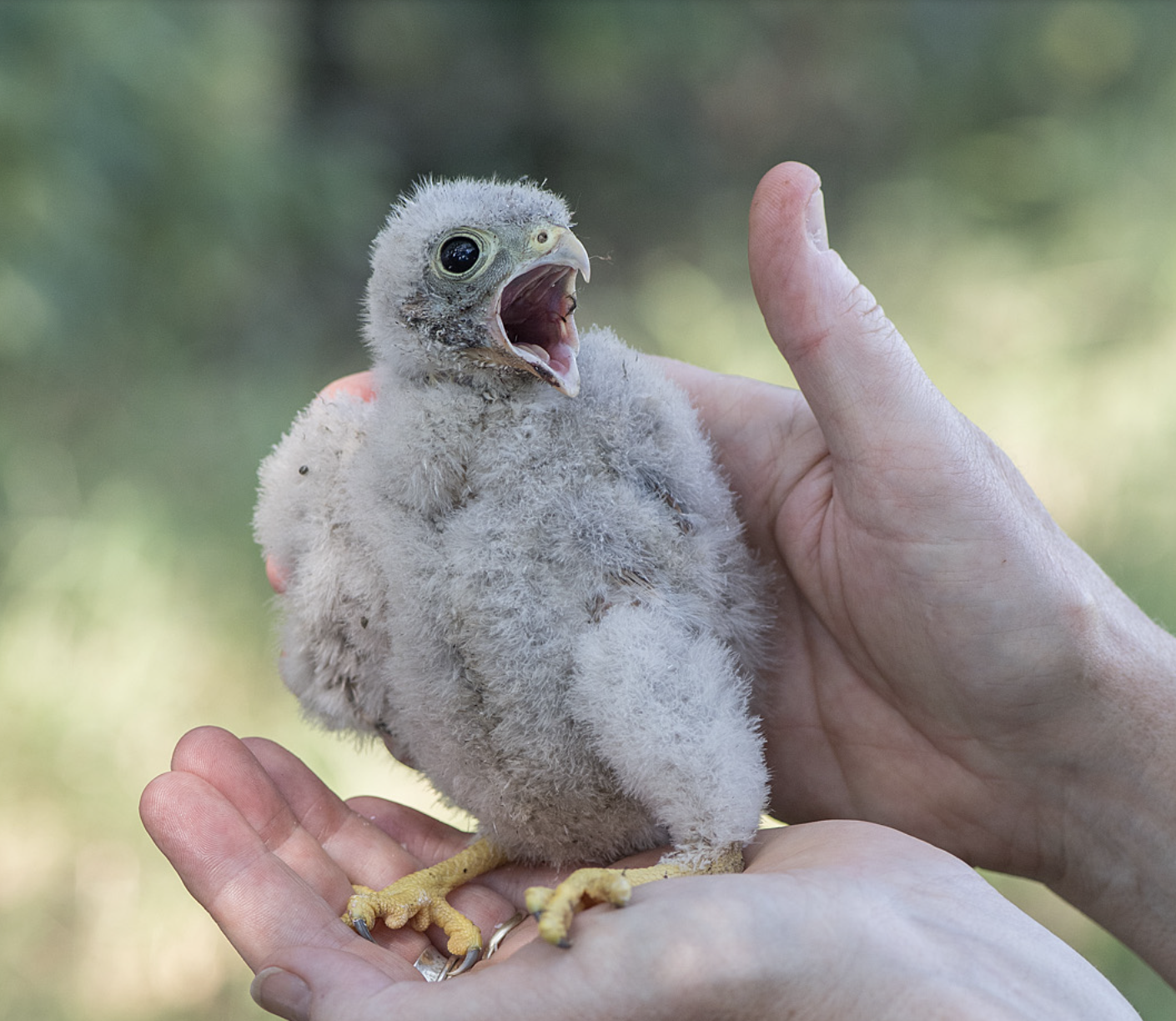
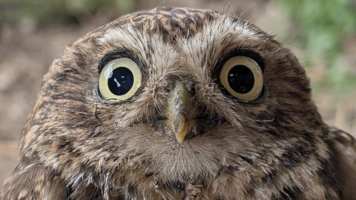
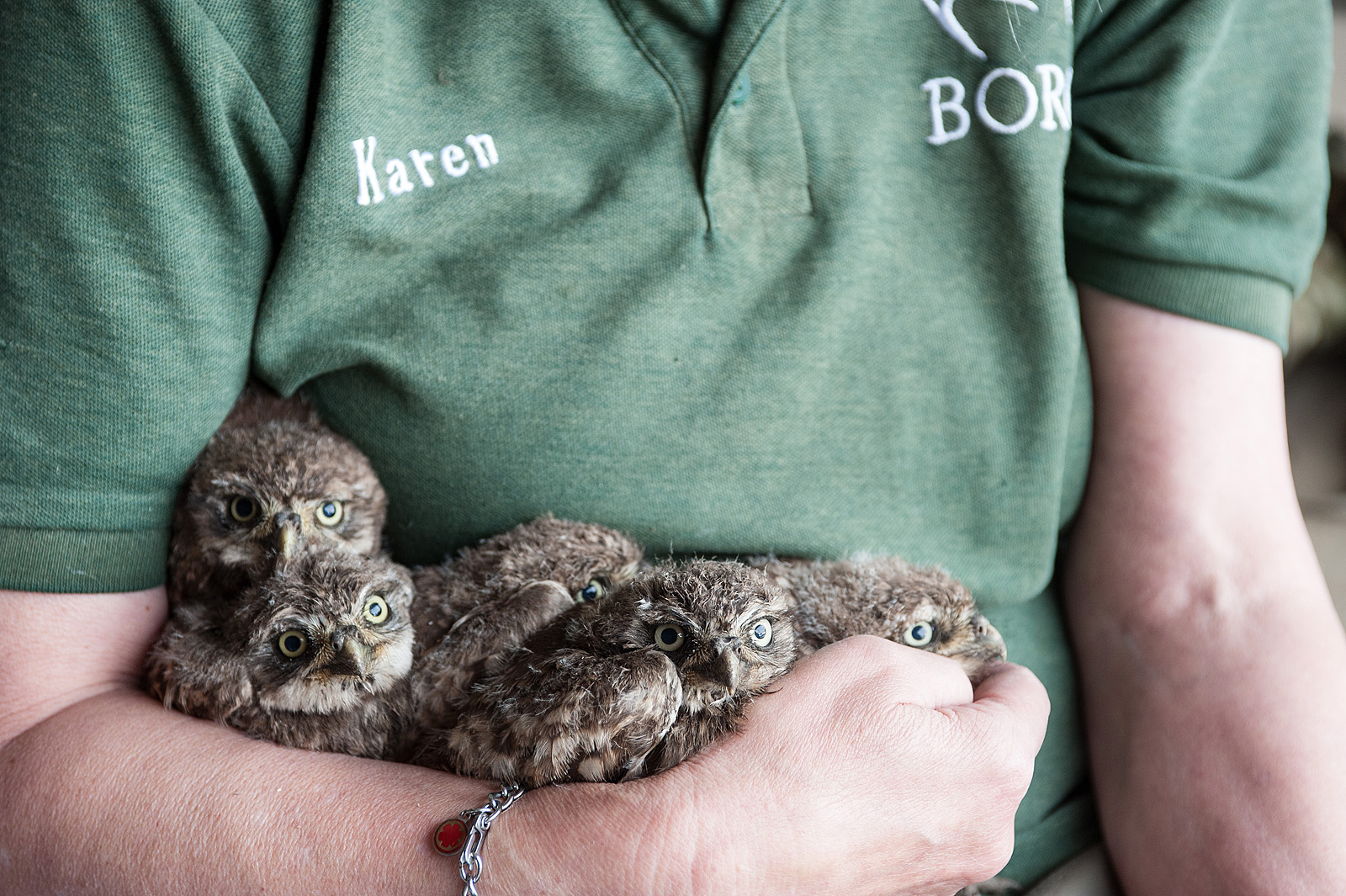
To complete the round-up, we have ringed 5 Little Owl chicks this month, all from one box, and during a thunderstorm. It wasn’t planned that way, but the weather broke quite suddenly, and happily we were able to take shelter in the landowner’s open-fronted garage while we carried on ringing. Karen found herself holding the babies while Claire got on with ringing – again, not planned, but sometimes it’s the unexpected things which lead to the most memorable moments.
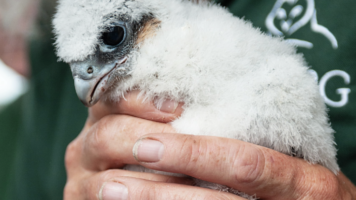
Nobody reading this in the short term will need reminding that June has been hot, with national temperature records broken and hosepipe bans already starting in places. That’s inevitably had a knock-on effect on our activities, perhaps most recently with short early-morning outings to get something done before the day becomes unbearable for humans or for birds. Inevitably what we do causes some stress to the birds but we aim always to keep that to a minimum, and to monitor them as we go. One consequence of that approach has been that we have needed to postpone – possibly cancel – helping our friends in the Bucks Bird Club with ringing Peregrine chicks this month. They have been visible on camera and it’s been obvious that in their exposed location, while they are surviving well enough, they are over-heated and stressed. Aren’t we all. The additional stress of being handled, weighed, measured and ringed just seemed something best avoided while the weather stays like this. I was lucky enough to be able to record that activity around last year’s chicks and I’ll be sad to miss it if it can’t be done this year, but bird welfare must, always, come first.
A final thought on the weather. We have now been using Stokbord as the primary material for building boxes for around 7 years. Initial doubts about it centred on its lack of breathability – would it get hotter or more humid than plywood boxes? We still ask ourselves questions about box design choices, and with Nick’s fabulous work in the last couple of years our box-building has taken some great steps forward – for example simpler mounts, reusable components across different box types, additional drainage holes and much-improved access doors. We will continue to adapt them based on experience in use. However, it’s good to go back to the report we compiled back in 2019, which compared temperature and humidity data between Stokbord and two other “standard” box designs, on a hot day in July. That showed no significant difference between the them. In the years of field use since, we think the only Stokbord box which has needed replacement was as a result of it being crushed as its host tree fell on it. Owls had a tough year last year, but this year’s thriving population is using predominantly Stokbord boxes. We still have older boxes in the field, and we often repair rather than replace if that’s viable, so not every box is of the new type, but both objective and empirical evidence validate the choice. If it’s hot inside a Stokbord box this month, it would be just as hot in any other sort.
I wish us all a cooler July!